
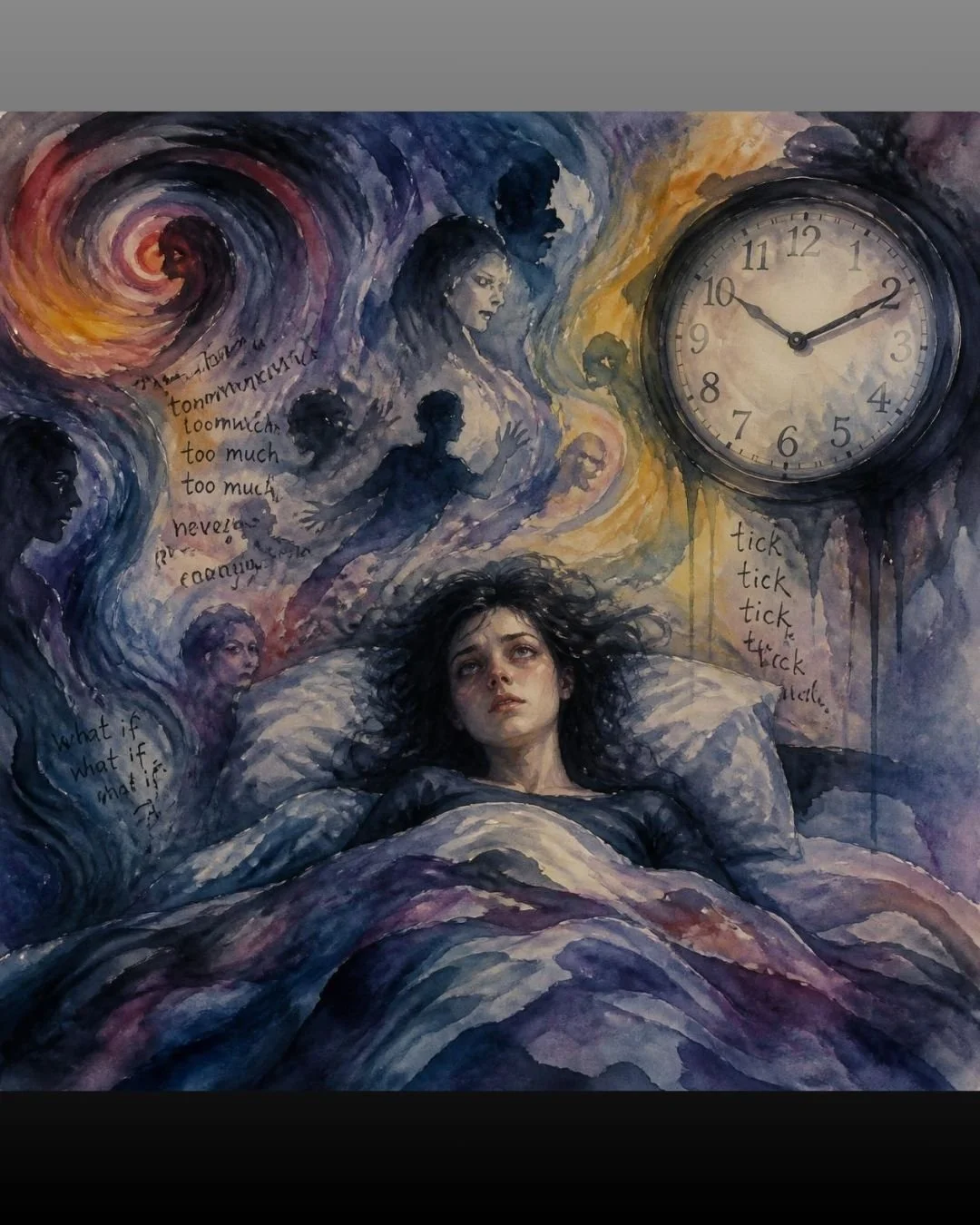
When Your Clock Is Broken: Circadian Rhythm Disruption in ADHD and Its Trauma Amplification
When Your Clock Is Broken: The Exhausting Reality of ADHD, Trauma, and Insomnia
Ever been told to "just go to bed earlier" or try better "sleep hygiene"? For adults with ADHD and trauma, that advice doesn't just fail—it ignores biology. Emerging research reveals that ADHD is deeply tied to a delayed circadian rhythm, meaning the internal biological clock literally runs hours behind the rest of the world. When a history of trauma is layered on top, the nervous system remains on high alert all night, completely scrambling sleep architecture. This isn't a lack of discipline; it’s a biological "double hit" to the body's timing system. Discover why standard sleep advice fails this population, and how a trauma-sensitive, biologically informed approach can help restore felt safety and genuine rest.
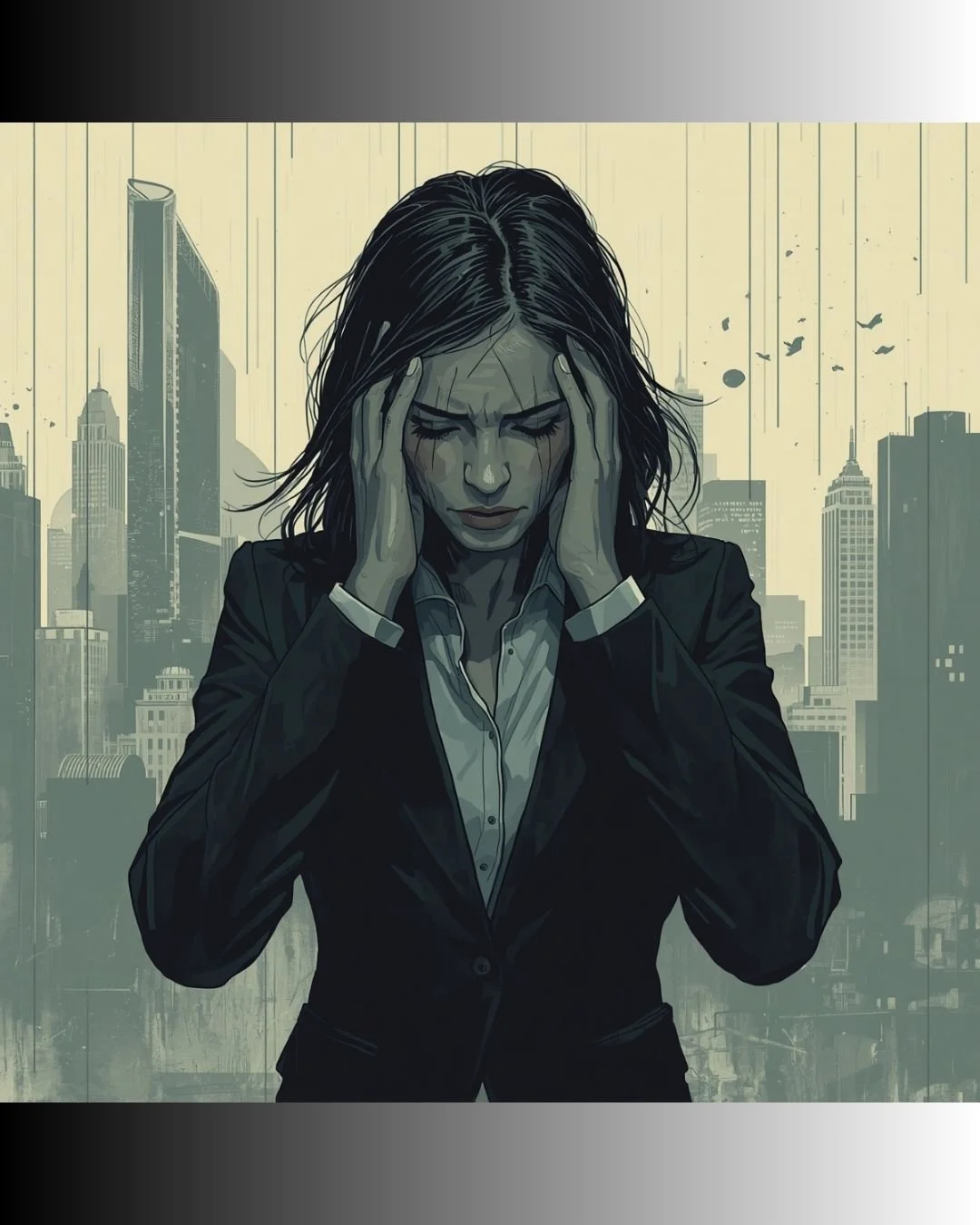
The Architectures of Over-Extension: ADHD, Anxiety, and the Success Trap
In the high-stakes environments of executive leadership and high-tech corridors, ADHD often defies the stereotypes of disorganization. Instead, it manifests as a sophisticated "success trap," where anxiety functions as a chemical surrogate for dopamine. In my latest article, The Architectures of Over-Extension, I explore the neurobiological and somatic costs of using chronic hyper-arousal to mask executive function deficits. While this "anxious mobilization" may yield significant career milestones, it often leads to profound nervous system exhaustion and a fragmented sense of self.

When Fairness Feels Like a Threat: Justice Sensitivity and the ADHD Nervous System
For many adults with ADHD, fairness is not an abstract value—it is a felt experience. Moments that others may dismiss as minor or inconsequential can register in the ADHD nervous system as emotionally charged, morally urgent, and deeply destabilizing. A broken agreement, inconsistent rules, or witnessing someone being treated unjustly can trigger a cascade of physiological arousal, emotional overwhelm, and meaning-making that feels impossible to shut off.
This response is often misunderstood as overreactivity or emotional rigidity. In reality, it reflects a pattern known as justice sensitivity: a heightened emotional and nervous system response to perceived unfairness. Research suggests that individuals with ADHD experience elevated justice sensitivity across multiple dimensions, closely linked to emotional regulation difficulties, rejection sensitivity, and heightened threat detection. When fairness is violated, the body may respond as if safety itself has been compromised.
This article explores justice sensitivity through a neurobiological and psychological lens, examining why small injustices can feel so big for ADHDers, how justice sensitivity overlaps with Rejection Sensitive Dysphoria, and why these responses are not character flaws but biologically meaningful signals shaped by lived experience. Understanding this pattern opens the door to self-compassion, regulation, and healing—rather than shame.