

Meet Dr. Cristina Louk, PhD, LMHC, ACS
Helping adults and teens with ADHD, trauma, and neurodevelopmental differences discover lasting healing through evidence-based therapy and a deeply humanistic approach.
My Philosophy
My Philosophy
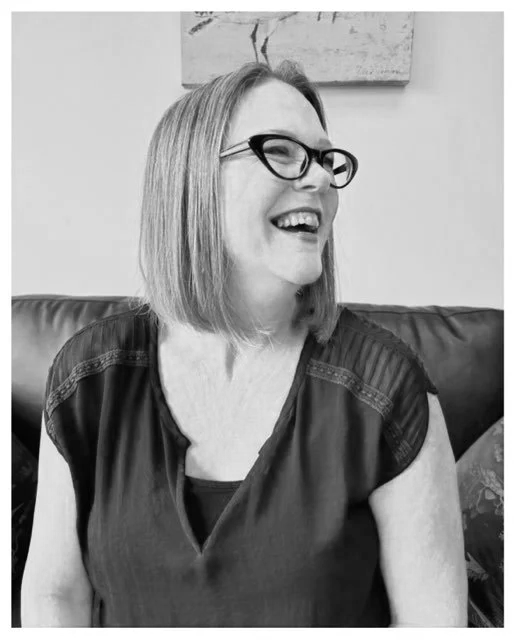
Dr. Cristina Louk, PhD, LMHC, ACS, CYT
I believe the goal of therapy is not to fix what is broken, but to help you build a life worth living. This distinction matters. So much of the language around ADHD and neurodivergence is deficit-based, focused on what is missing, what is disordered, what needs to be managed. My work starts from a different premise: that growth happens from the inside out, and that the traits you have been taught to see as problems often hold the seeds of your greatest strengths.
Before I became a therapist, I spent thirty years teaching ballet. I learned early that you cannot force a dancer into a shape that does not belong to their body; the work is not correction, but discovery, helping someone find the line that is already theirs and build the strength to hold it. I bring that same belief into the therapy room. You are not a set of symptoms to correct. You are a whole person, and my job is to help you understand yourself well enough to build a life that fits.
This is why my approach is grounded in humanistic and positive psychology rather than a purely clinical model. I draw on the PERMA framework, positive emotion, engagement, relationships, meaning, and accomplishment, because I want our work together to be oriented toward what makes life feel worth living, not just toward symptom reduction. For many of my clients, especially those diagnosed with ADHD later in life, this reframe alone changes everything. You are not behind. You are not lazy. You have been operating without an accurate map, and much of our work is building one.
Meaning-making sits at the center of how I practice. I am less interested in helping you manage a diagnosis than in helping you make sense of your story, understand how your mind actually works, and build a life that honors that instead of fighting it.
Why I Specialize in ADHD and Trauma
I work primarily with adults navigating ADHD, late-identified neurodivergence, and complex trauma because I understand how deeply these experiences shape a person's sense of self, often long before there is language to explain why. Many of my clients arrive having spent years, sometimes decades, believing something was fundamentally wrong with them. They were told they were too much or not enough: too sensitive, not disciplined enough, too scattered, not trying hard enough. By the time they find their way to my office, that story has often calcified into shame.
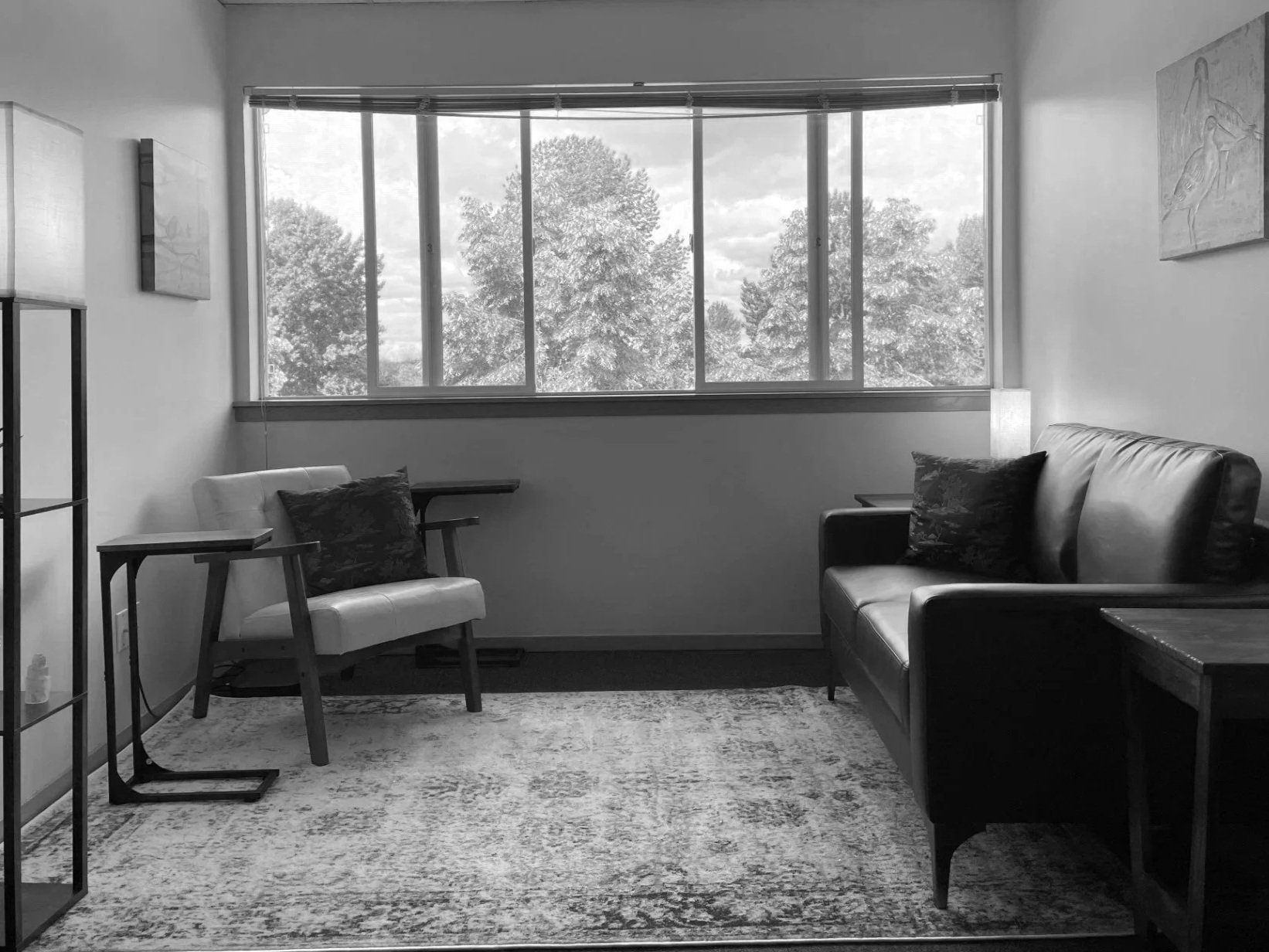
Woodinville Office
Late diagnosis complicates this further. When ADHD is identified in adulthood, it does not simply explain the present; it rewrites the past. Suddenly, years of school struggles, career setbacks, or relationship patterns need to be understood through a new lens, and that process of reinterpretation is its own kind of grief. I specialize in this work because I believe it deserves more care and more time than a quick diagnostic conversation can offer.

Trauma and neurodivergence are also deeply intertwined, more than most clinical models acknowledge. Living for years without an accurate understanding of your own mind is, in itself, a kind of chronic stress. Masking, overcompensating, and internalizing criticism from a world not built for how you think all leave a mark. My training in complex trauma allows me to hold both threads at once: the neurodevelopmental reality of ADHD and the accumulated emotional weight of navigating a world that misunderstood you for years. Neither is treated as secondary to the other.
What You Can Expect When We Work Together
Therapy with me is collaborative, not prescriptive. I am not going to hand you a worksheet and call it a treatment plan, nor am I going to spend months only listening without offering direction. My approach blends structure with genuine curiosity about who you are and what your life could look like when it is built around your actual strengths, not around a version of productivity or normalcy that was never designed with your mind in mind.
In our early sessions, we will spend time understanding your story fully, not just your symptoms, but how you got here: what shaped your sense of self, what patterns have followed you, and what strengths have carried you even when they went unnamed. From there, we build a shared understanding of how your mind works, and we begin identifying what a meaningful, sustainable life looks like for you specifically.
You can expect me to be direct. I will not dance around hard truths, but I will always deliver them with care, and I will never pathologize you for struggling with systems that were not built for how you think. You can also expect warmth. Humanistic therapy is rooted in the belief that people move toward growth when they feel genuinely seen, so I prioritize creating a space where you do not have to perform wellness or mask your struggles to be taken seriously.

Dr. Cristina Louk, PhD, LMHC, ACS, YCT
Over time, our work often moves from symptom management toward something larger: a redefined relationship with yourself. Many of my clients describe this shift as finally exhaling after years of holding their breath. That is the work I am here to do with you, not simply helping you cope, but helping you build a life that feels like it is truly yours.
My Clinical Specialties
-
Neurodivergence: ADHD, ASD, AuDHD
My work with neurodivergent adults is grounded in a neuroaffirmative framework, one that treats ADHD, ASD, and AuDHD presentations as differences in wiring, not deficits to correct. This lens is woven throughout my doctoral training in Clinical Psychology and has been refined through years of clinical practice across community mental health, private practice, and postdoctoral settings. I bring particular depth to late-identified and complex presentations, where diagnosis often arrives after decades of misunderstanding, and where the clinical work involves not just present-day support, but helping clients make sense of a lifetime through a new, more accurate lens.
-
Humanistic & Positive Psychology
My doctoral dissertation examined the empirical roots of happiness, identifying gratitude, prosocial behavior, awe, and grit as measurable pathways to wellbeing. That research became the foundation of my clinical orientation. I use the PERMA framework, positive emotion, engagement, relationships, meaning, and accomplishment, as a structuring lens in nearly all of my clinical work, prioritizing growth and meaning-making over symptom management alone. This is not therapy as damage control; it is therapy oriented toward building a genuinely fulfilling life, grounded in decades of positive psychology research and humanistic theory.
-
ADHD Assessment
I conduct comprehensive ADHD and neurodevelopmental assessments using gold-standard instruments, including the CAARS-2, BAARS-IV, CEFI, PAI, ADI-R, and SRS-2, tailored to each client's presentation and history. My assessment reports go beyond a diagnostic label; they include detailed developmental and academic history, behavioral observations, differential diagnosis, and concrete treatment and accommodation recommendations. My clinical background spans oncology, residential, and community mental health settings, giving me a broad diagnostic lens when distinguishing ADHD from co-occurring trauma, anxiety, or other presentations that can complicate an accurate picture.
-
Trauma
My approach to trauma treatment is somatic and parts-based, drawing on Internal Family Systems (IFS) to help clients understand the protective roles different parts of themselves have taken on, and to build a compassionate relationship with the parts still carrying pain. I use the TSI-2 in trauma-informed assessment; and I integrate nervous system psychoeducation directly into treatment, helping clients recognize and work with their own physiological responses rather than being ruled by them. This work is informed by clinical experience across residential and community mental health settings, where complex trauma presentations were the rule, not the exception.
-
Clinical Supervision
As an Approved Clinical Supervisor (ACS) and University Supervisor for Counseling@Northwestern at The Family Institute, I bring both academic and private-practice supervisory experience to this work. My supervisory approach is grounded in the same humanistic and positive psychology framework that shapes my clinical work, prioritizing the building of genuine clinical confidence over the accumulation of hours. I center validation and direction in my supervisory relationships, helping supervisees develop their own clinical judgment rather than simply routing decisions through me.
-
Hypnotherapy
My training in hypnotherapy began at Saybrook University and has been shaped over years of clinical practice into an approach specifically adapted for the neurodivergent brain. Traditional hypnotherapy often assumes a mind that can settle into stillness easily; the ADHD brain rarely works that way. I have adjusted the pacing, patterning, and formatting of my inductions to hold attention rather than lose it, creating a structure the ADHD mind can actually follow into a state of deep relaxation, quieting the restless internal voice that so often refuses to stop talking.
Education & Advanced Training
Doctor of Philosophy (PhD), Clinical Psychology
Saybrook University | Completed 2022
Dissertation: A Narrative Approach to Happiness in Adult Individuals with Intellectual Disability and Mental Illness Residing in Supported Living Environments
My dissertation research asked a question most clinical training never gets to: what does happiness actually look like for adults whose lives have been shaped by both intellectual disability and mental illness, populations too often defined by deficit rather than possibility? That question continues to shape how I practice today. It taught me to listen for narrative, not just diagnostic criteria, and it convinced me that every client, regardless of diagnosis or cognitive profile, has a story of meaning worth uncovering. This belief now sits at the center of my humanistic, strengths-based approach to ADHD, trauma, and assessment work alike.
Master of Arts (MA), Clinical Psychology
Saybrook University | Completed 2018
Thesis: Personality Disorders and Structured Assessment Protocols for Use with Individuals with Intellectual Disability
My master's research focused on building more accurate, structured assessment tools for a population frequently misdiagnosed or overlooked entirely. That early commitment to precision and equity in assessment became a throughline in my career, and it directly informs how I approach neurodevelopmental and ADHD assessment today: rigorously, and with an awareness of how easily complex presentations get misread.
Bachelor of Science (BS), Psychology
Washington State University | Completed 2015
Licensure & Credentials
Washington Licensed Mental Health Counselor (LMHC) - LH61394091
Florida Telehealth (TLHT) Licensed Mental Health Counselor Registration - #3805
South Carolina Professional Counselor Telehealth Provider Registration - #901
Approved Clinical Supervisor (ACS) - #ACS-6384
Certified Yoga Teacher - 500 (CYT500)
IAYT Approved Somatic Healing Certification
Clinical Experience
Private Practice
Founding my own practice taught me what it means to build clinical work entirely around a philosophy rather than an institution's model of care. I provide individualized psychotherapy and hypnotherapy for adults and adolescents, and I have learned that the most effective treatment plans are the ones built collaboratively, not prescribed.
Psychological Assessment
Across postdoctoral and internship settings, I conducted comprehensive neurodevelopmental evaluations for ADHD, Autism Spectrum Disorder, learning disabilities, and personality disorders. This work sharpened my ability to integrate standardized testing with clinical interviewing and real-world behavioral data, and it taught me that an assessment report is only useful if it translates into a treatment plan someone can actually live by.
Adolescents
Working with younger clients across neurodevelopmental and trauma-related presentations taught me to adapt my clinical language and pacing without ever diluting the work. Teens require a different kind of trust-building, and that experience continues to inform how I meet clients of every age where they are.
Cancer Psychology
Providing psychotherapy across the full cancer continuum, treatment, survivorship, palliative, and hospice care, taught me to sit with existential weight without flinching from it. That experience shapes how I approach any client facing a life-altering diagnosis or identity shift, ADHD included.
Intellectual Disabilities
Years of clinical and behavioral work with individuals with intellectual and developmental disabilities taught me that communication style, not client capacity, is usually the barrier to good care. I learned to build positive behavior support plans and DBT skills programming that met people exactly where they were, an approach that still shapes how I adapt treatment for neurodivergent clients today.
Program Leadership
Overseeing residential mental health programs, with a management team of 15 and indirect oversight of roughly 300 staff, taught me that clinical excellence is a systems problem as much as an individual one. I learned to build training, supervision, and workforce protocols that protected both client outcomes and staff wellbeing, a lesson I now carry directly into how I structure supervision and practice leadership.
Teaching & Clinical Supervision
Teaching Assistant
Saybrook University
University Supervisor
Counseling@Northwestern, The Family Institute at Northwestern University
Approved Clinical Supervisor (ACS)
Center for Credentialing & Education, Inc.
Clinical Supervisor for LMHCAs
Peace Humanistic Therapy, PLLC
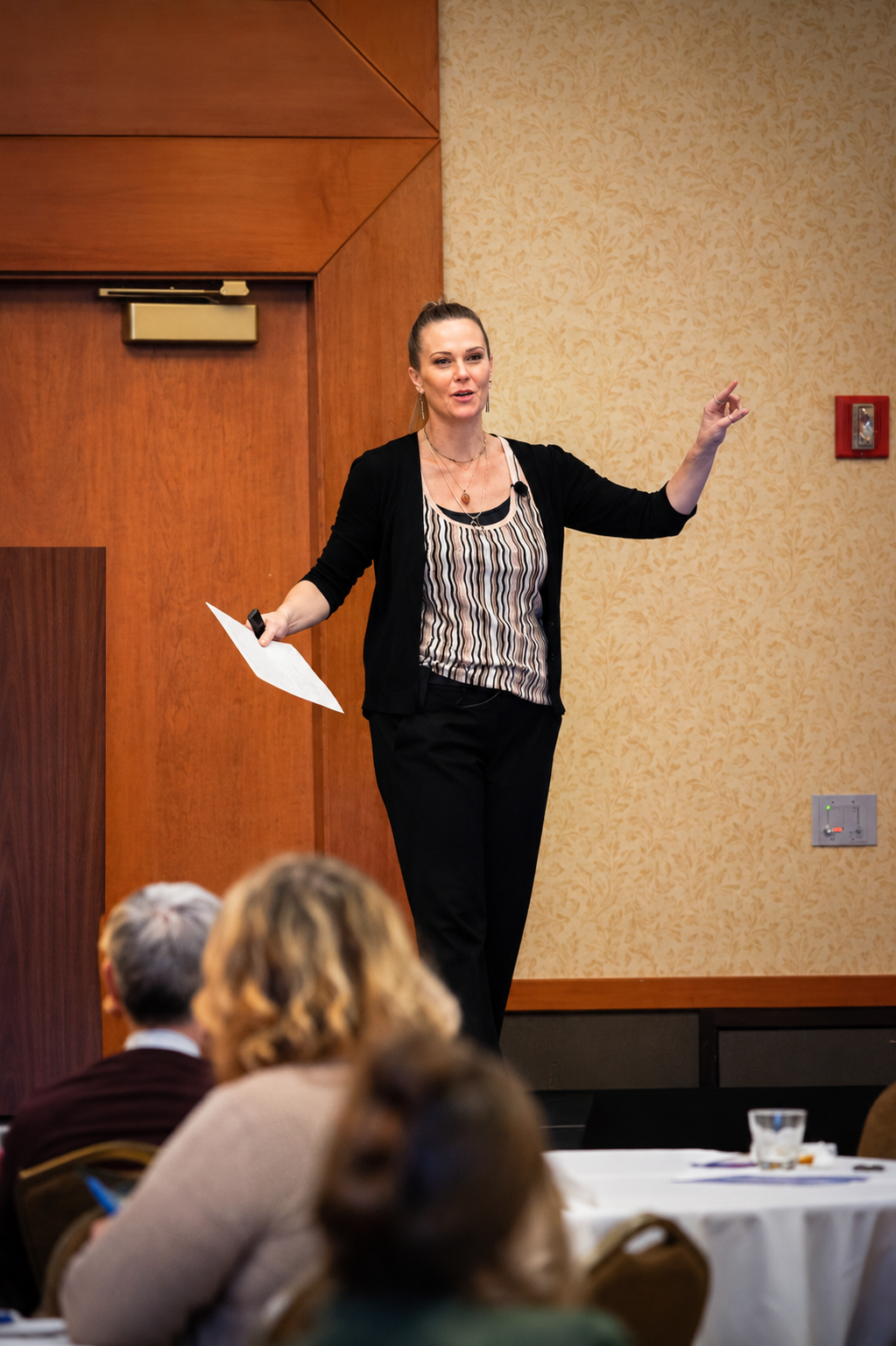
I approach teaching the way I approach therapy: with curiosity, humanism, and a deep belief in the capacity of people to grow when they feel genuinely seen. My goal as an educator has never been simply to transmit clinical knowledge, but to cultivate reflective, ethically grounded practitioners who can hold complexity with confidence. I draw on my experience as both a clinician and a doctoral-level researcher to bridge theory and practice, whether I am leading a reflective supervision group for counseling interns or assisting in teaching graduate coursework in psychotherapy and multicultural frameworks. I am equally committed to building inclusive learning environments, where students from every background can contribute and thrive, and I carry that same commitment into supervision: prioritizing genuine clinical confidence over the mere accumulation of hours.

Research & Publications
Louk, C. M. (2022). A narrative approach to positive emotions in adult individuals with mild to moderate intellectual disability and mental illness residing in supported living environments (Doctoral dissertation, Saybrook University).
I chose this research question because I kept noticing a gap in the literature: adults with intellectual disability and co-occurring mental illness were studied extensively for their deficits and almost never for their capacity for joy. I wanted to know what happiness actually looked like for this population, in their own words, not as measured by a symptom checklist. That narrative-first approach has never left my clinical work. Whether I am sitting with a client newly diagnosed with ADHD or someone processing complex trauma, I am listening for their story of meaning, not just their diagnostic profile. This is the research question underneath nearly everything I do.
Presentations & Speaking
-
Beyond the Grand Moments: Eliciting Narratives of Joy in Therapy
Washington Mental Health Counselors Association Annual Conference | May 2026
A conference presentation exploring how narrative-based interventions can help clients identify and build on moments of genuine joy, extending the core insight from my dissertation research into clinical practice. -
Beyond the Buzz: Rewire Your Brain for Lasting Calm & Contentment
She Rises Summit (Virtual) | September 2025
An invited talk on neuroscience-informed strategies for sustainable calm, moving beyond quick-fix approaches to nervous system regulation. -
Break the Burnout Cycle for the Helping Professionals
Peace Humanistic Therapy, PLLC Online Workshop | July 2023
A workshop developed specifically for clinicians and helping professionals navigating burnout and compassion fatigue in caregiving roles. -
Happiness and the Benefits of Positive Emotions
Saybrook University, Midterm Residential Conference & Global Campus Online Presentation | July & September 2021
Early presentations of my ongoing research into the empirical roots of happiness, gratitude, and positive emotion. -
Pandemic-Related Worry and Anxiety While Facing Cancer Treatment
Providence Regional Cancer Partnership | May 2020
A talk addressing the compounded psychological burden of cancer treatment during the COVID-19 pandemic.



Leadership & Professional Service
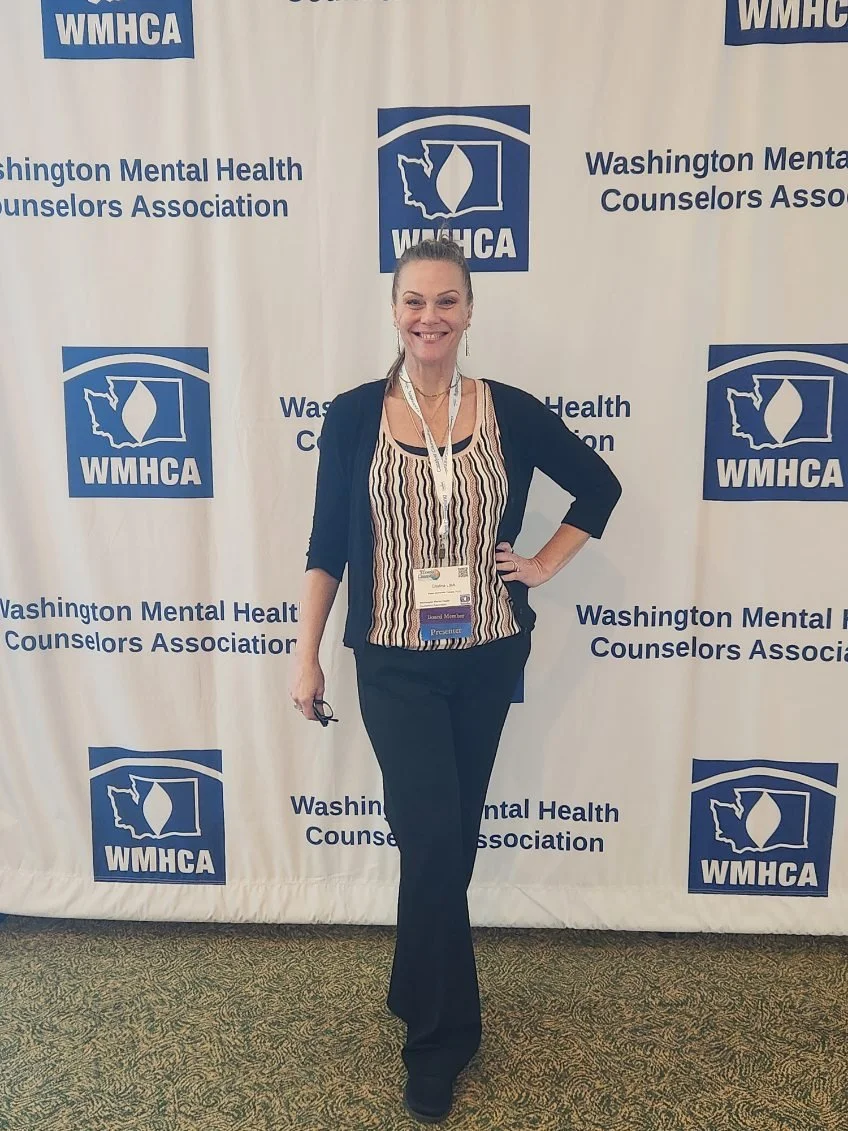
President, Washington Mental Health Counselors Association (WMHCA) | 2026–2027
Elected as chief executive leader of Washington State's primary professional association for licensed mental health counselors, setting vision and direction for statewide advocacy, professional development, and ethics initiatives.
President-Elect, WMHCA | 2025–2026
Contributed to executive-level policy direction and organizational governance in preparation for presidential leadership.
Conference Task Force Chair, WMHCA | 2025–2026
Led the multidisciplinary team that planned and executed WMHCA's first-ever annual conference, from concept through completion, including keynote selection, programming, budget, and marketing.
Co-Chair, Professional Development & Education Committee, WMHCA | 2024–2025 & General Committee Member 2023-Present
Vetted and coordinated continuing education presenters, ensuring all programming met ethical and evidence-based practice standards.
General Board Member, WMHCA | 2023–Present
Contribute to strategic planning, policy development, and DEI initiatives at the state level.
Working Together is Simple: Schedule Your Consultation
Take the first step today—reserve your consultation online and begin a transformative, neurodiversity-affirming therapy experience in Woodinville, Bothell, and the greater Eastside region, or via secure telehealth throughout Washington State.
-
Starting your journey toward ADHD therapy, trauma counseling, or neurodevelopmental assessments is easy. Schedule a free, no-obligation 15-minute video consultation to:
Discuss your goals, challenges, and what support you need
Determine if telehealth or in-person sessions in Woodinville, WA are the best fit
Explore a personalized plan for therapy, hypnotherapy, somatic work, or assessments
-
This brief session ensures we can align on your needs, your strengths, and the best approach for neurodiversity-affirming, trauma-informed care. It’s your first step toward:
Reducing overwhelm and gaining clarity
Rebuilding self-regulation, confidence, and agency
Moving toward meaningful, lasting personal growth