
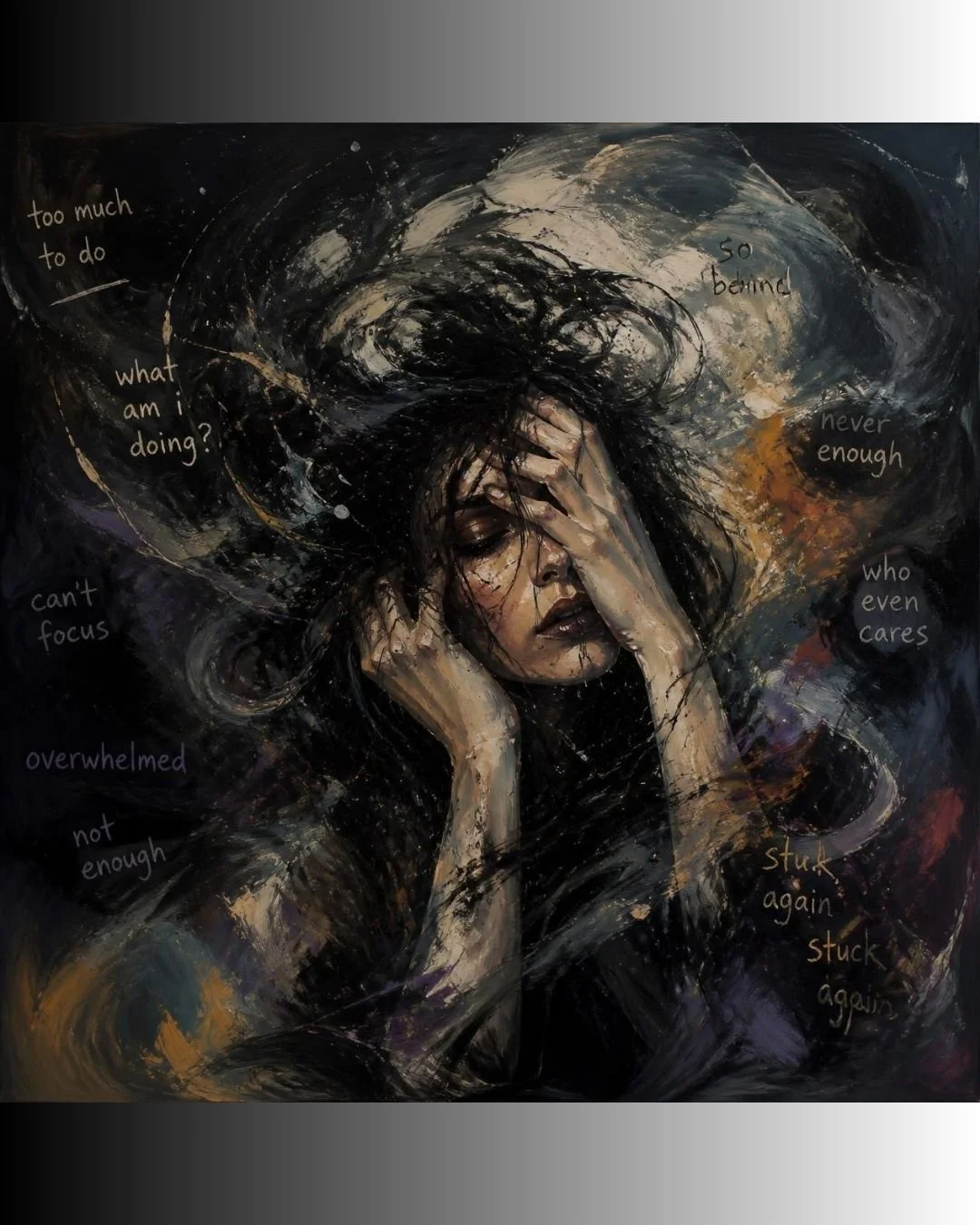
Is It ADHD or Anxiety? How to tell the difference, and when you can have both.
Struggling with concentration, restlessness, or procrastination, but unsure if the root cause is ADHD or anxiety? While both conditions can disrupt executive functioning and leave you feeling overwhelmed, they stem from different underlying mechanisms. Discover how to evaluate symptom patterns, mindsets, and developmental history to better understand what is driving your difficulties—and why it is so common to experience both.

Can ADHD Get Worse With Age? Why Adult ADHD Can Feel Harder in Midlife
Does ADHD Get Worse With Age? Why Adult ADHD Can Feel Harder in Midlife
While research shows core ADHD symptoms typically decrease across adulthood, many adults experience midlife as significantly more challenging. This increased struggle rarely stems from a worsening of the disorder itself. Instead, it is often driven by the loss of external structure, an accumulation of complex professional and personal responsibilities, and the eventual breakdown of long-term compensatory masking. Factors like chronic stress, sleep disruptions, normal cognitive aging, and midlife hormonal shifts can further strain executive functioning, making existing vulnerabilities feel far more severe.

ADHD Paralysis: Understanding Why You Can Know What to Do and Still Feel Unable to Begin
There is a particular experience that many adults with ADHD describe with considerable frustration: they know what needs to be done, understand why it needs to be done, and may genuinely want to complete it, yet they cannot seem to initiate the behavior necessary to get started... ADHD paralysis generally refers to the subjective experience of being unable to initiate or engage in an intended activity despite recognizing that the activity needs to be completed.

Adult ADHD: A Multi-Domain Clinical Reality
It is never just one thing. For adults with ADHD, the research documents what clinicians who work with this population already know intuitively: impairment does not stay contained within a single domain. An occupational setback becomes a relational strain. A relational strain becomes a depressive episode. A depressive episode compounds executive dysfunction — and the cycle continues. Bogdańska-Chomczyk et al. (2025) call this cascading impairment, and it is one of the most clinically significant — and most underaddressed — realities of adult ADHD in practice.

Emotional Dysregulation in Girls With ADHD: A Developmental and Differential Diagnostic Consideration
Attention-deficit/hyperactivity disorder (ADHD) in girls is frequently misunderstood because it does not always present through overt hyperactivity or disruptive behavior. Instead, many girls experience ADHD as dysregulated affective intensity—rapid mood shifts, rejection sensitivity, shame reactivity, and chronic self-criticism. When ADHD is evaluated through a predominantly male behavioral framework, these internalized symptoms are often misattributed to anxiety, depression, or trauma-related disorders.
Distinguishing ADHD-related emotional dysregulation from trauma-based reactivity is clinically essential. Although both may involve irritability, concentration difficulties, and heightened arousal, ADHD reflects a neurodevelopmental regulatory vulnerability, whereas posttraumatic stress disorder (PTSD) is organized around conditioned fear responses and trauma cues. Without careful developmental assessment, treatment may address only part of the clinical picture.
A formulation that integrates neurodevelopmental history, relational context, and trauma exposure allows for more accurate diagnosis and more precisely targeted intervention.

Why Adults With ADHD Are So Often Misunderstood in Relationships
Adults with ADHD are often misunderstood in relationships—not because of a lack of care, but because of differences in communication, working memory, and emotional processing. This article explores relationship distress in ADHD through a neuropsychological lens, highlighting why misunderstanding is common and how reframing these patterns can reduce shame and improve connection.

Reconceptualizing ADHD Burnout: A Nervous System Response to Chronic Regulatory Load
ADHD burnout is not a failure of motivation or resilience. It is a nervous system response to chronic cognitive, emotional, and sensory load. This article reframes burnout through a neuropsychological and regulatory lens, distinguishing it from depression and shutdown while highlighting sensitivity as an adaptive early-warning system.