
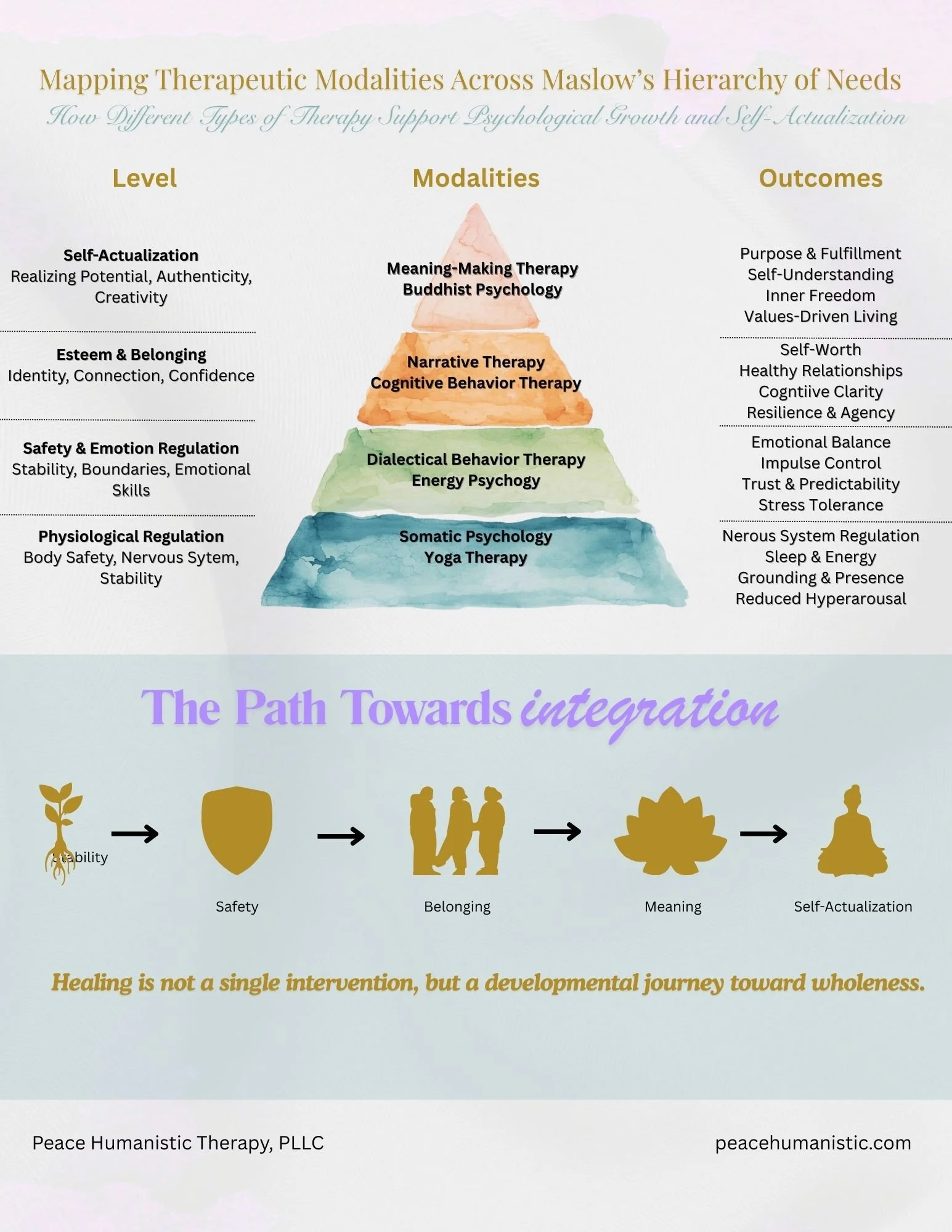
Mapping Therapeutic Modalities Across Maslow’s Hierarchy of Needs: How Different Types of Therapy Support Psychological Growth and Self-Actualization
Psychological healing rarely happens through a single insight or breakthrough. Instead, it tends to unfold through a developmental process in which the body, mind, relationships, and sense of meaning gradually come into alignment. One of the most enduring frameworks for understanding this process is Maslow’s hierarchy of needs, which proposes that human development moves through layered domains—from physiological regulation to emotional safety, relational belonging, identity formation, and ultimately self-actualization (Maslow, 1943).
In psychotherapy, this developmental perspective offers an important insight: not all therapeutic modalities operate at the same psychological level. Some approaches focus on stabilizing the nervous system and restoring a sense of physical safety. Others help individuals develop emotional regulation skills, reconstruct internal narratives, or explore deeper questions of meaning and purpose.
When these modalities are viewed through a developmental lens, they are no longer competing schools of thought but complementary tools supporting different layers of human growth.
For individuals navigating trauma, chronic stress, or ADHD, this framework can be particularly illuminating. Rather than asking “Which therapy is best?” the more helpful question may be:
“What level of development needs support right now?”
Understanding where you fall within this hierarchy can help guide therapeutic work toward interventions that support genuine integration rather than temporary symptom relief.
Read the full article to explore how different therapeutic approaches map across Maslow’s hierarchy—and how to identify what kind of support may best serve your current stage of growth.