
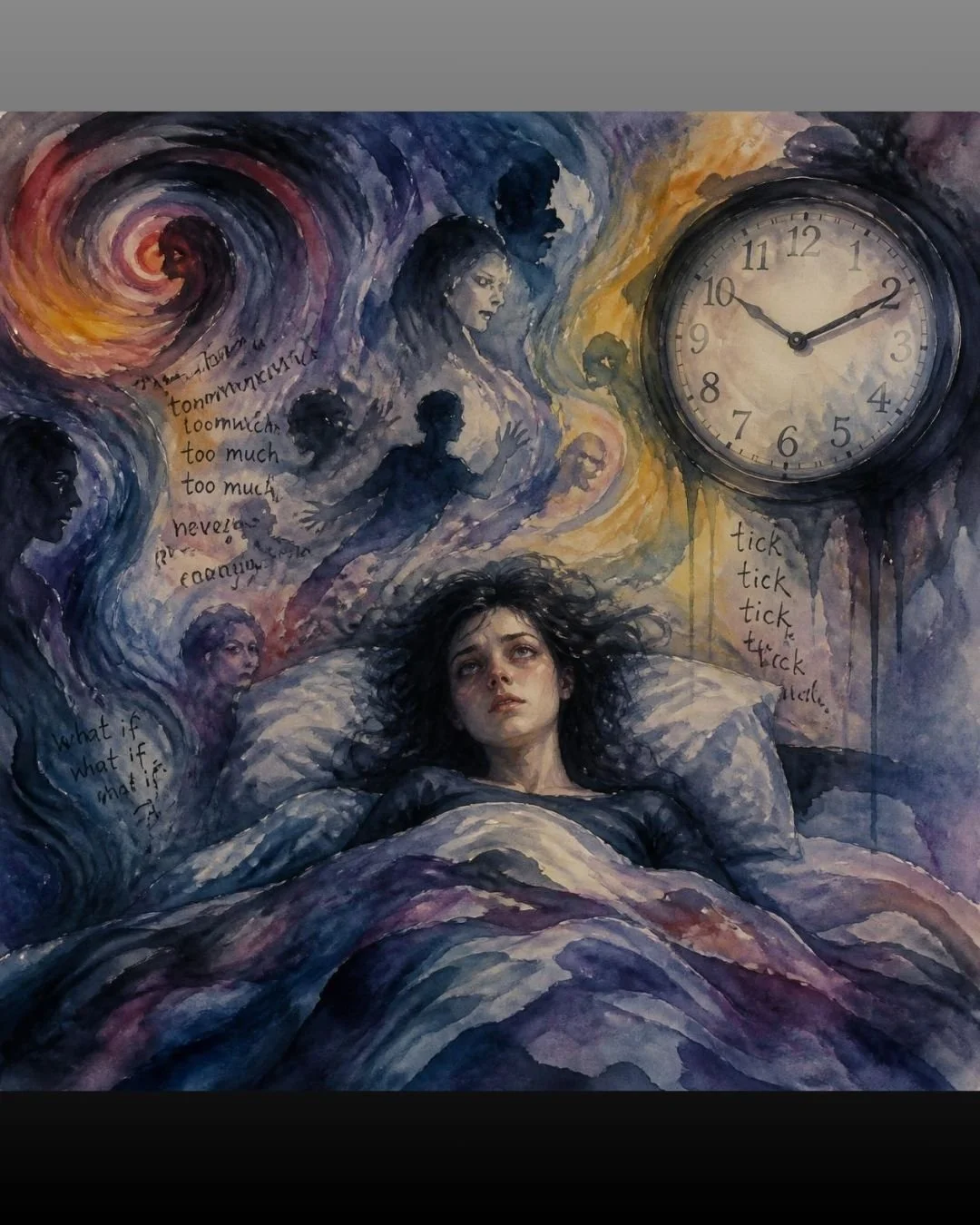
When Your Clock Is Broken: Circadian Rhythm Disruption in ADHD and Its Trauma Amplification
When Your Clock Is Broken: The Exhausting Reality of ADHD, Trauma, and Insomnia
Ever been told to "just go to bed earlier" or try better "sleep hygiene"? For adults with ADHD and trauma, that advice doesn't just fail—it ignores biology. Emerging research reveals that ADHD is deeply tied to a delayed circadian rhythm, meaning the internal biological clock literally runs hours behind the rest of the world. When a history of trauma is layered on top, the nervous system remains on high alert all night, completely scrambling sleep architecture. This isn't a lack of discipline; it’s a biological "double hit" to the body's timing system. Discover why standard sleep advice fails this population, and how a trauma-sensitive, biologically informed approach can help restore felt safety and genuine rest.

The ADHD Brain and Justice Sensitivity
For many adults with ADHD, reactions to unfairness or exclusion can feel sudden, overwhelming, and deeply personal. A comment that others brush off lingers for hours. A perceived slight ignites a visceral response before logic has a chance to intervene. These experiences are often dismissed as “overreacting,” yet neuroscience tells a very different story.
The ADHD brain does not process social and moral pain in a muted way. It processes it intensely. Systems responsible for threat detection, emotional salience, and bodily awareness activate rapidly, while the networks responsible for regulation and contextual meaning take longer to come online. What emerges is not fragility, but a nervous system doing its best to protect belonging in environments that have often felt unpredictable or misattuned.
Justice sensitivity and rejection sensitivity are not character flaws. They are adaptive responses shaped by neurobiology, development, and lived experience. When fairness is violated or recognition is withheld, the body reacts first—tightening, heating, bracing—long before the mind can assess intent or nuance. Understanding this sequence is the first step toward healing, not by suppressing sensitivity, but by learning to meet it with awareness, compassion, and regulation.